
Myofascial Yoga:
Ball Placement and Fascia Anatomy
Take as Module 1 of the 200-hour Myofascial Yoga Teacher Training program, for Yoga Alliance Continuing Education Credits, or just to learn more about adding myofascial yoga into your practice.
Fun Fascia Fact
About 7.5 liters of fluid moves through the extracellular matrix each day. (That’s a lot, considering we only hold 4.5 liters of blood at a time!) When your fascia is restricted, it limits the flow of fluid. Imagine a sponge wrapped up tightly with elastic bands and thrown into a sink full of water: it’s not going to be able to absorb very much.
When we move, stretch, or apply pressure to our body we are squeezing the sponge. If you can successfully allow those deep tissues to let go while you squeeze, you loosen the tight elastic. This is why the placement of balls in yoga poses–where and how they apply pressure (squeeze the sponge)–is so important, and why an inner state of mental surrender is so effective for facilitating change.
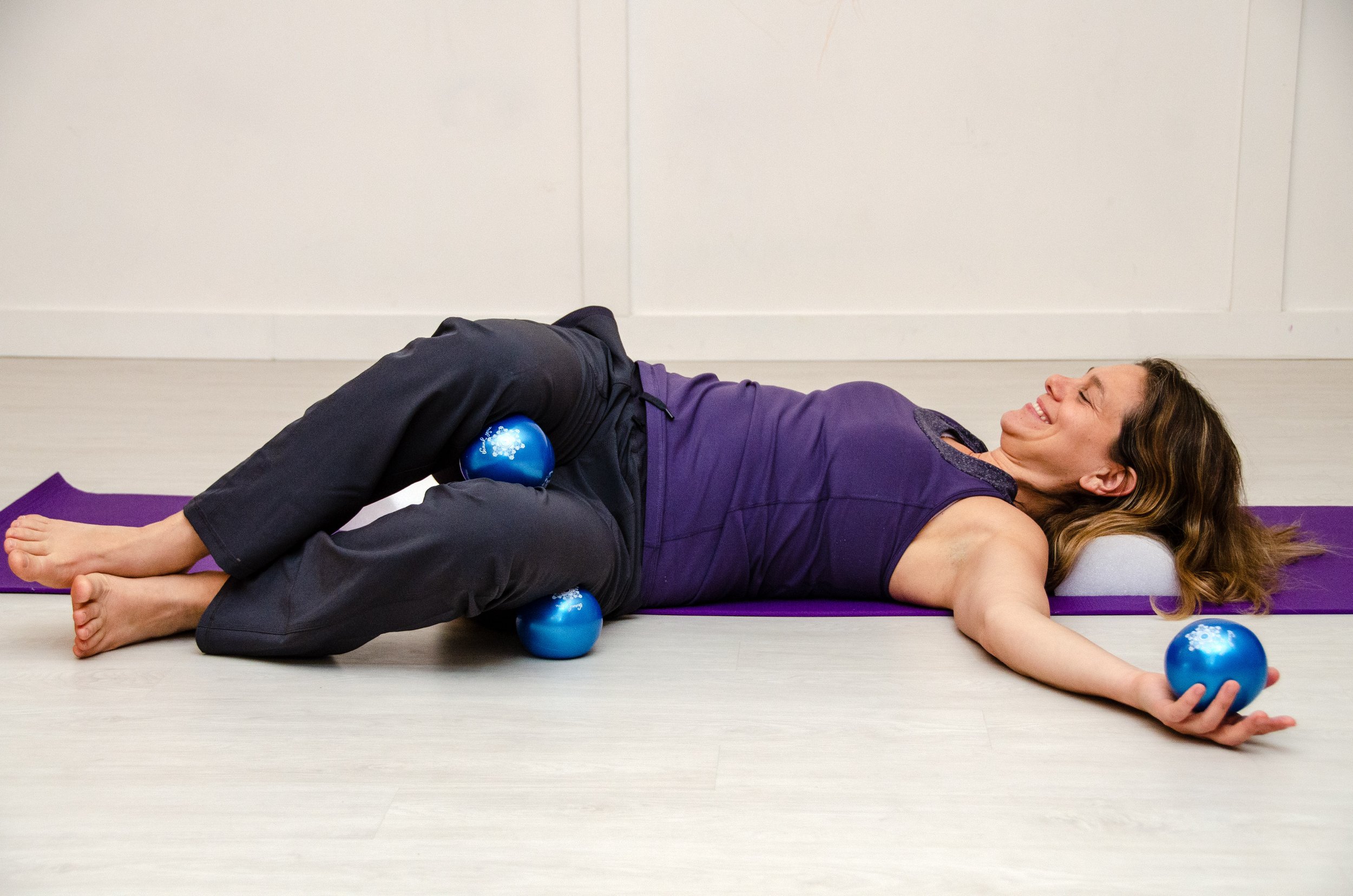
In this module, Myofascial Yoga: Ball Placement and Fascia Anatomy, we will learn how to incorporate soft balls into our yoga practice and where to place them in various yoga poses to create pressure, along with the benefits of rebounding. Rebounding is the third pillar of myofascial release, and an important aspect to integrate into any movement regimen. In this practice, we tap into the fluid in the cells with rhythmical movements like jostling and rocking to break up habitual holding patterns and restrictions in the fascia.
This workshop can be used toward the 200-hour Myofascial Yoga teacher training or as continuing education credits with Yoga Alliance.
Topics covered in the Myofascial Yoga: Ball Placement and Fascia Anatomy module:
Myofascial rebounding in supine, seated, and standing postures and how it’s useful for our fascia and nervous system
Understanding unconscious holding patterns, and how to access conscious choice and change through rebounding and unwinding
Ball placement in yoga poses for soft tissue release, as well as deepening interoceptive awareness or resourcing for pain management
The science of fascia at the cellular and molecular level
Understanding your fascial system through the lens of the ‘liquid crystal’ matrix, and why this matters to our wellbeing
Fascial anatomy and how to engage some of the more popular fascial lines through mindful movement and common yoga poses
Date: April 26, 2026
Hours: Sunday, 10 am to 3 pm Mountain, live on Zoom
Self-Study Content: 6 hours self-paced video, audio and other self-study and practice guides are unlocked upon registration for each module
Guest Teacher: To be announced
Platform: Zoom
Investment: $360 CAN
Bonus Monthly Practice Sessions
Practice sessions that go along with each module take place once a month on the Wednesday “teenth” (a date between the 13th and 19th, like January 14 or February 18). It is not required that you attend the Wednesday classes live, though they are a great opportunity to practice with community and ask any questions you may have on our month’s current content. Replays of these classes are provided to you and are part of your course package for extra practice time.
Click here to go to bonus monthly practice session dates and descriptions.
Register
Please read our Refund Policy
Get lifetime access to this course and begin your journey to becoming a Myofascial Yoga Teacher.
A Yoga Alliance-recognized 200-hour Myofascial Yoga teacher training that blends fascia-informed yoga, myofascial release principles, nervous system regulation, and mindful movement into one teachable method.


Lead trainer for all modules: Christine Wushke
HI, I’m Christine. I’m looking forward to getting to know you as we move together through the 200-hour myofascial yoga teacher training program.
Interested in becoming a yoga teacher?If you have questions about the Myofascial Yoga: Ball Placement and Fascia Anatomy, the Myofascial Yoga Teacher Training Program, yoga in general, or any of my other programs, I’d love to hear them!
Rooting for you,
Christine